Taipei Day Tours
I’m Serious Day Tour Man AI, your day trip expert. Ask me anything — where to go, how to get there, and what’s actually worth your day.
Taipei has the best day-trip belt in Asia for effort against reward: a gold-rush lantern town on a misty hillside, sky lanterns rising off working train tracks, a cape of strange rock formations, and volcanic hot springs you can reach on a metro card. One famous name needs its status read first — Taroko Gorge was badly damaged by the 2024 earthquake, and what’s actually open is covered below.
Two practical facts run through everything. The EasyCard covers nearly all the transit in this list, including the buses. And typhoon season, roughly July through September, is the weather caveat on every outdoor entry.
Here’s what’s worth a day, with real times and honest trade-offs.

Popular Day Trips
Jiufen
Lantern Lanes, a Waterfall
Yehliu
The Weekday-Morning Rule, the Queen’s Head
Beitou & Yangmingshan
Springs, Mountain
Jiufen & Shifen — The Northern Classic
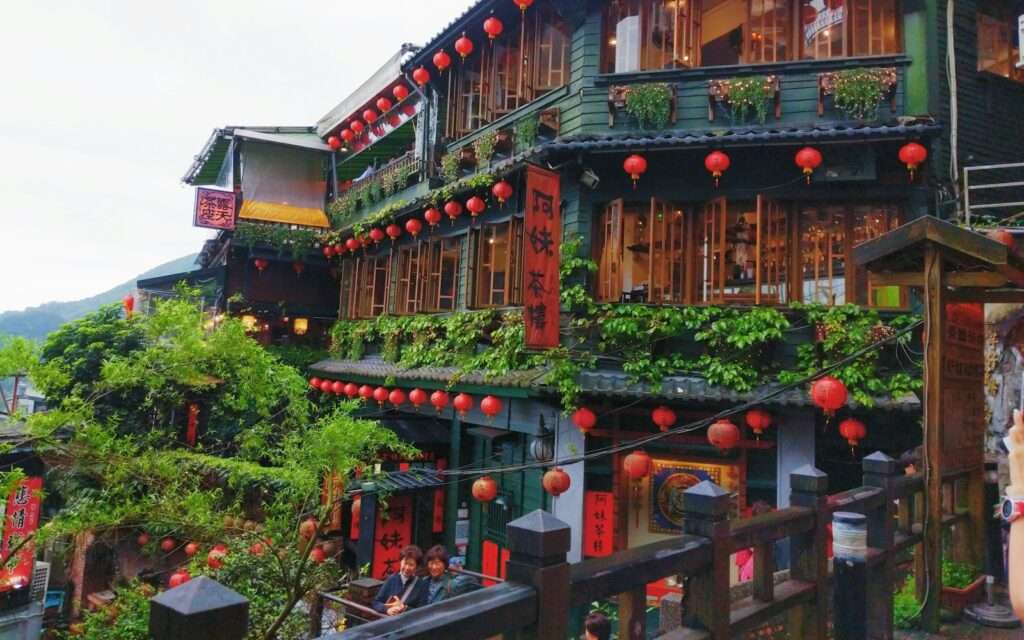
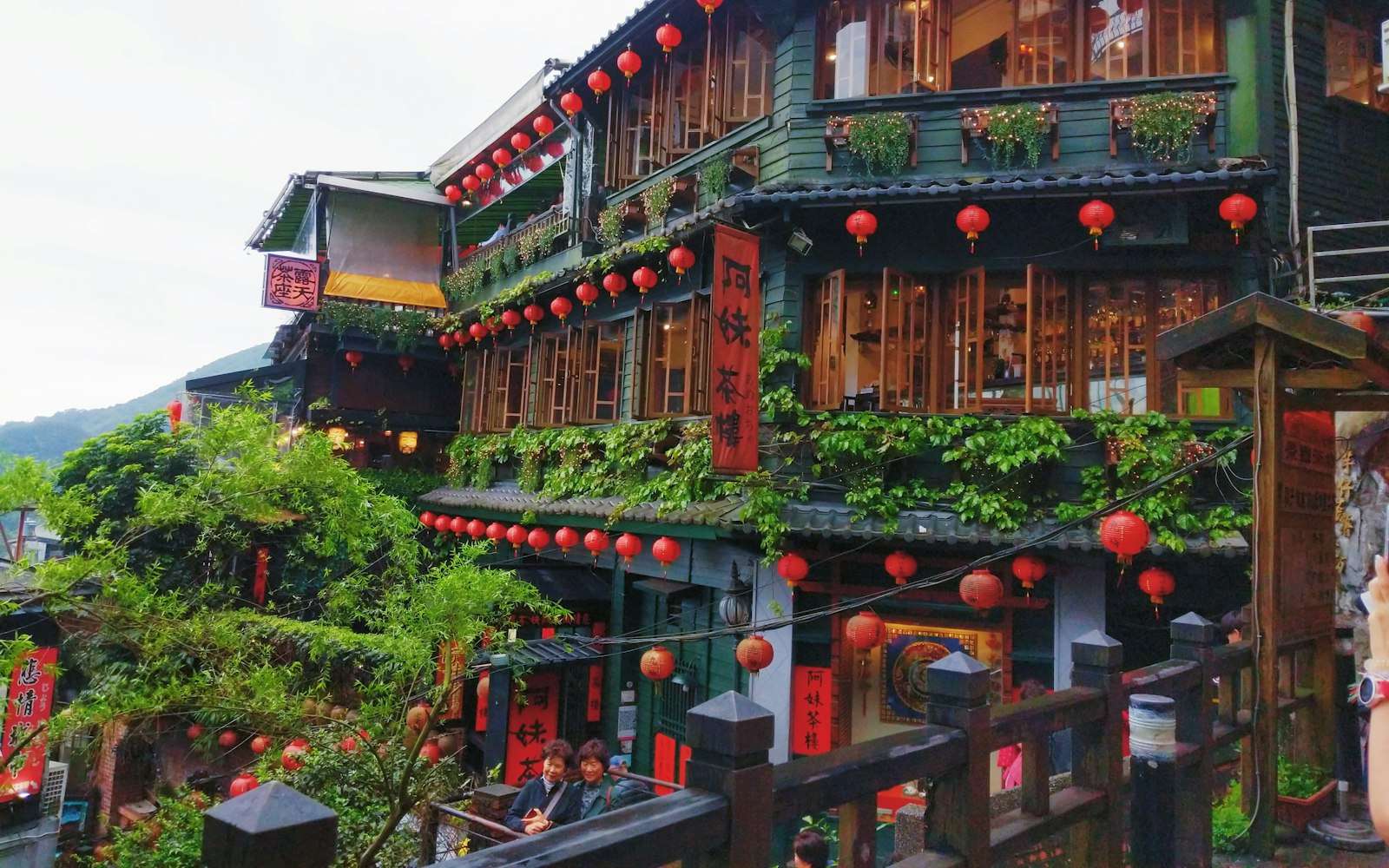
Start with the myth corrected. Jiufen — the gold-rush town stacked on a hillside above the sea, its stairways hung with lanterns and wrapped in near-permanent mist — is universally sold as the inspiration for Spirited Away. Miyazaki has flatly denied it. The resemblance comes from shared Japanese-era architecture, and the town needs no borrowed pedigree.
The visit: eat your way up the old street (taro-ball soup at the stairside institutions, peanut ice-cream rolls), then take a seated tea session at A-Mei or one of its rival teahouses, with the mist and the harbor below. The tea costs more than the street food and buys you out of the crowd. Time it by one rule: tour buses fill the town from 11 to 4, so go early in the morning or stay for the lantern-lit evening after they leave.
Pair it with Shifen on the Pingxi line, where sky lanterns painted with wishes rise off the active tracks between trains, and Taiwan’s broadest waterfall is a short walk away. One honest note: the lanterns come down somewhere. Cleanup crews and biodegradable versions reduce the impact without erasing it — weigh the ritual for yourself. The full loop makes a day; tours run both stops efficiently, and the train-and-bus version costs half as much.
Read the full Jiufen and the Pingxi Line day-trip page.
Yehliu & the North Coast — The Stone Cape
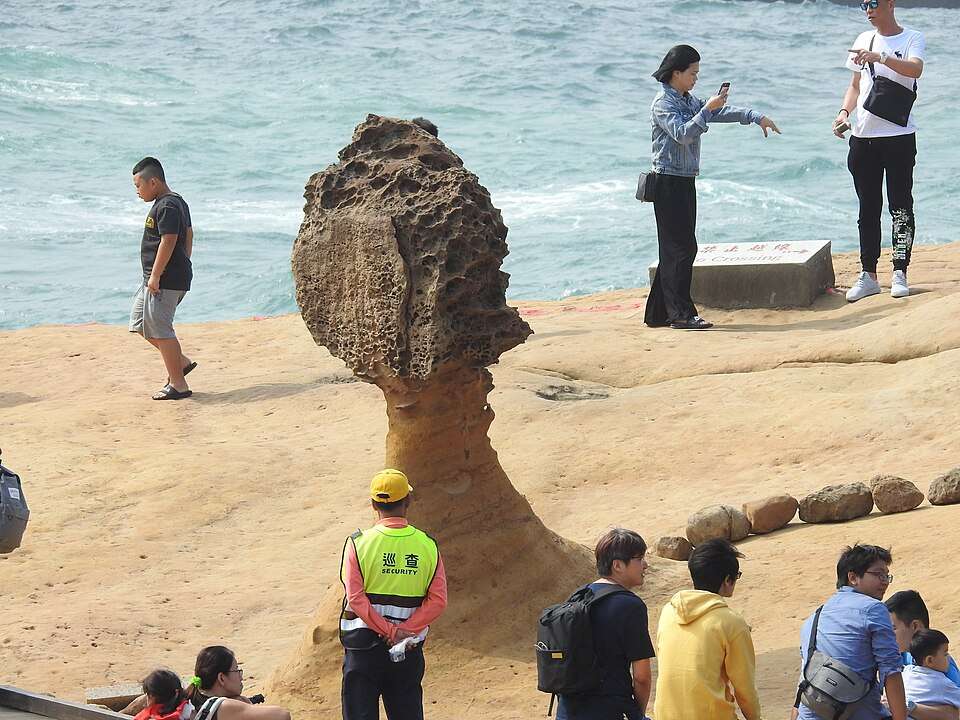
Yehliu Geopark, an hour northeast, is the geology headliner: a cape of mushroom-shaped hoodoos, honeycomb shelves, and the Queen’s Head, the erosion-carved profile that is Taiwan’s most photographed rock. Two facts to plan around. The Queen’s neck thins measurably each year, and the park keeps a replica ready for the day it snaps. And in high season the photo queue runs genuinely long for a thirty-second turn — arrive at opening and the cape is a landscape instead of a line.
Walk the full boardwalk loop past the candle rocks and the fairy-shoe formation. It’s an easy 90 minutes, and the far end of the cape loses the crowds entirely. Then make the day with a coastal add-on: Keelung’s Miaokou night market on the way back — arguably Taiwan’s best eating market, which turns geology into dinner — or the crab harbor at Guihou for the lunch version.
The north coast catches wind and spray. In a mild squall the rocks are more dramatic and less crowded, and some travelers take that trade on purpose.
Read the full Yehliu day-trip page.
Beitou & Yangmingshan — Volcano by Metro
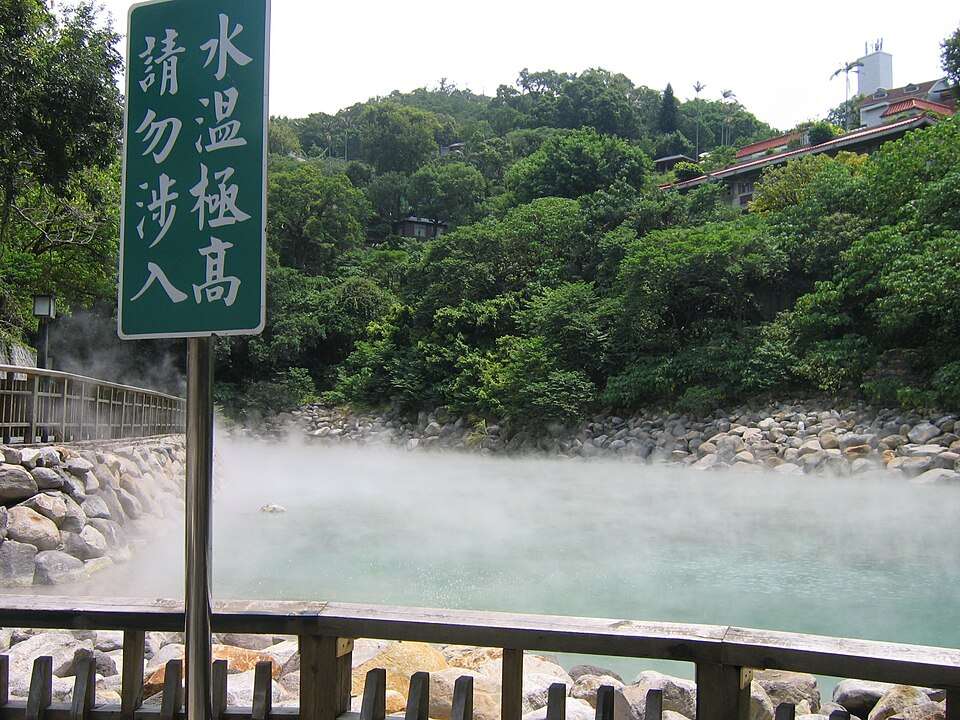
Beitou wins the effort-to-reward contest outright. The hot-spring district sits on the city’s own MRT — the themed Xinbeitou branch train sets the tone — in a valley of Japanese-era bathhouses around Thermal Valley, where jade-green pools near 80°C fog the walkways.
Sort the bathing by budget and temperament. The public outdoor Millennium pools cost a local rate; swimsuits and caps are required, the etiquette is posted, and the veteran regulars enforce it, which is part of the attraction. The historic inns descended from the Kagaya era sell the private-room upgrade. The Beitou Hot Spring Museum, in a Victorian-Japanese bathhouse, covers the history without the water.
Yangmingshan National Park rises directly behind. Buses climb to the fumarole fields at Xiaoyoukeng, the grassland trails at Qingtiangang, and the calla-lily and cherry-blossom seasons that mobilize the whole city — go on a weekday in bloom weeks or accept the crowds. Together, Beitou and Yangmingshan make the most accessible volcano-and-hot-spring day anywhere: a metro card, half to a full day, no tour required.
Read the full Beitou & Yangmingshan day-trip page.
Wulai — The Mountain Sleeper
Wulai is the quiet pick: forty minutes by bus from the MRT’s southern end, an Atayal indigenous township in a green river gorge. This is the most accessible genuine expression of Taiwan’s aboriginal cultures. The old street’s millet wine, boar sausage, and bamboo rice are tourist-facing but Atayal-owned, and the free Atayal Museum provides the context.
The program: ride the log-cart mini railway, a working relic of the timber era that now trundles visitors along the gorge rim. See Wulai Falls and take its cable car to the upland. Soak in the riverside hot springs — the developed bathhouses replaced the wild riverbank pools after typhoon closures, so current soaking is indoor-format. Walk the gorge itself, cliff-hung and green.
Seasonal notes: cherry blossoms in late winter draw the crowds Wulai otherwise lacks, summer brings river-tracing operators for the adventurous, and typhoons periodically rearrange access — check ahead in storm season. Half to a full day, and you will see fewer international tourists here than anywhere else within reach of the city.
Taroko Gorge — Read the Status First
Taroko, the marble gorge that was Taiwan’s single greatest natural sight, was severely damaged by the April 2024 Hualien earthquake, and typhoons since have added to the damage. As of mid-2026 the park is partially open under a controlled system, and the honest summary is this: the visitor center, Taroko Terrace trail, and the Tianxiang area are open; Highway 8 through the gorge opens only in timed release windows a few times a day, on a schedule revised monthly; and the headline trails — Shakadang, Swallow Grotto, Zhuilu — remain closed, some for years to come. Public buses from Hualien reach the visitor center only.
What that means in practice: the gorge is still magnificent and still visitable, but only with planning built around the release windows — which favors a Hualien-based guided arrangement or a carefully timed self-drive, on top of the 2.5-to-3-hour train reach from Taipei. Check the park’s official status pages before building any plan, and treat tour listings that read as if nothing happened with suspicion.
If Taroko doesn’t fit, spend the long day elsewhere: the Qingshui Cliffs viewpoints where accessible, Yilan’s hot-spring towns via the snow-tunnel buses, or the northeast coast’s Caoling Historic Trail.
The Night Markets, the Museum & Taipei Itself
The night markets are the national institution, and they are not interchangeable. Raohe is the connoisseur pick — compact and dense, with the black-pepper buns from the coal-fired oven at the gate as the single best item on the circuit. Ningxia is the local-food purist’s floor. Shilin is the biggest and most touristed: go for the scale, eat selectively. Tonghua/Linjiang is the neighborhood version most tourists miss. Two rules everywhere: the length of the queue is the most reliable guide to what’s good, and stinky tofu smells far worse than it tastes — order it once. The MRT’s no-eating rule is real and enforced; it ends at the station exit.
The National Palace Museum holds the imperial Chinese collection Chiang Kai-shek’s retreat carried across the strait, which makes it the world’s greatest Chinese art museum by contents. The jadeite cabbage and the meat-shaped stone draw the queues; the bronzes and Song ceramics are worth the hours. Book ahead and go early. Longshan Temple provides the working-faith counterpoint, with incense etiquette posted and volunteers who explain the fortune blocks.
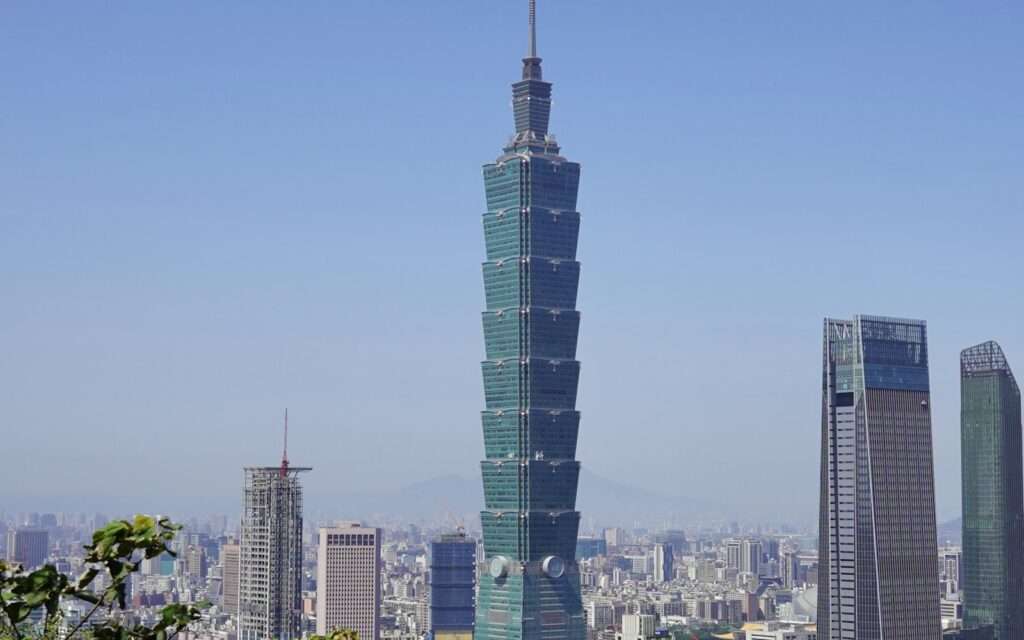
For the skyline, the free option wins: Elephant Mountain’s stair trail takes twenty minutes and frames the view with Taipei 101 in it — the one shot the tower’s own observatory can’t take. Go at dusk. The Maokong gondola to the tea plantations makes the gentle half day, and Din Tai Fung at its original Xinyi shop is the xiao long bao benchmark — the queue is worth it once. Late autumn — clear, cool, and crowd-free — is the connoisseur’s season.
Frequently Asked Questions
Was Jiufen the inspiration for Spirited Away?
Miyazaki has denied it — the resemblance comes from shared Japanese-era architecture. The town carries the visit on its own: go early or stay past dusk, when the tour buses leave and the lanterns take over.
Is Taroko Gorge open?
Partially, under a controlled system — the visitor center and Tianxiang area are open, Highway 8 opens in timed release windows a few times daily, and the headline trails remain closed. Check official park status before planning, and be suspicious of tours that don’t mention any of this.
Can you do hot springs in Taipei without a tour?
Yes — Beitou is on the MRT, with public pools at local rates, historic bathhouses, and the steaming Thermal Valley. Yangmingshan’s volcano trails are on the buses behind it. The metro card is the only ticket.
Which night market is best?
Raohe for quality and density (the black-pepper buns at the gate are mandatory), Ningxia for pure local food, Shilin for scale. The queue is the most reliable guide everywhere.
Is Taipei 101’s observatory worth it?
The free alternative wins: Elephant Mountain’s twenty-minute stair climb frames the skyline with the tower in it — the shot 101 itself can’t take. Go at dusk, and save the observatory ticket for a rainy day.